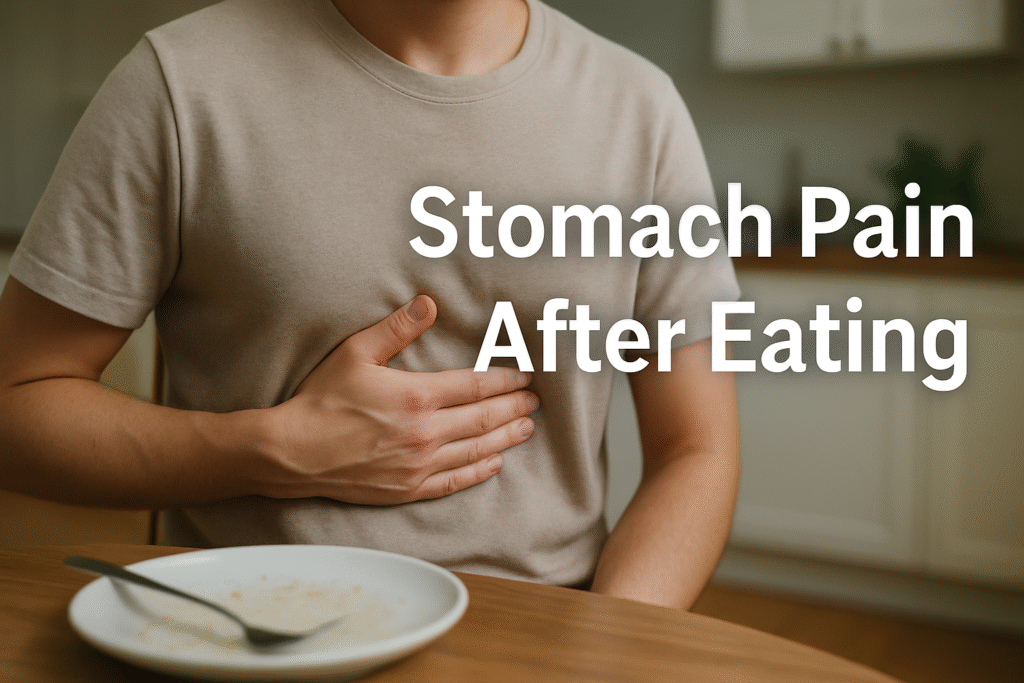
Stomach pain after eating is described in simple, practical terms, even if you’re unaware that the discomfort you feel actually has a name, indigestion, along with acid reflux, gas, food intolerance and ulcers! Quick ways to identify triggers (timing of pain, type of food consumed and where discomfort feels most intense) as well as simple relief steps are discussed.
1. When the pain is a while after eating
The stomach and hunger connection can affect how quickly symptoms show up after a meal.
-
Immediately (in the minutes after)
Pain that starts right after you finish a meal can point to stomach acid, indigestion, eating too quickly, or a trigger food. It may feel like burning in the upper belly, with bloating, mild vomiting, or a “food coming back up” feeling. Timing is a hint, not a diagnosis.
-
Later (1 to 3 hours)
Pain that appears later can match slower digestion-related issues, like gallbladder reactions to fatty meals, ulcer-type patterns, or intolerance effects as food moves further down. The location may shift, sometimes toward the right upper belly, and nausea can show up. Track timing, fat level, and repetition.
2. Where the pain sits
Pain location can change with tension and sensitivity in the gut, and the gut and mood connection helps explain why the same meal can feel different on different days.
-
Upper belly
Upper-belly pain after eating often feels like burning, pressure, fullness, tightness, or soreness. It commonly lines up with heartburn and patterns such as GERD or gastritis (irritation of the stomach lining). Note if it comes with burping, nausea, or sour taste, and whether antacids change the feeling.
-
Lower belly
Lower-belly pain is often crampy, gassy, or a twisting ache that may ease after passing gas or having a bowel movement. It frequently fits bowel-related patterns like IBS, constipation, or food intolerance. Track stool changes, bloating, and whether the same foods trigger the same spot repeatedly.
3. What else comes with the pain
Small routine habits can shift stomach comfort, and even simple timing changes discussed in morning water habits can influence bloating and reflux for some people.
-
Bloating
Bloating and stomach pain can show up fast and make you feel tight or swollen. It often fits overeating, eating too fast, lactose intolerance, IBS-type patterns, or high-fat meals that slow digestion. Note if bloating peaks 30 to 90 minutes later, and whether it eases with passing gas or gentle movement.
-
Nausea
Nausea after meals can happen when the stomach is irritated or emptying slowly. It may appear with gastritis, ulcers, food intolerance, or gallbladder trouble after greasy foods, and it can rise on high-stress days too. Watch for repeated nausea after the same foods, and take vomiting, fever, or worsening pain seriously.
-
Heartburn
Heartburn is a burning feeling in the chest or throat after filling, fatty, spicy, or acidic meals. It strongly fits acid reflux patterns and often worsens when lying down. Sour or bitter taste, frequent burping, and repeat burning after meals are common clues.
4. Acid and stomach-lining causes
Night timing matters for reflux-type pain, and what happens during sleep helps explain why lying down can make burning feel stronger.
-
GERD (acid reflux)
This bucket fits when burning shows up in the upper belly or chest shortly after meals, with sour taste, belching, or throat irritation. It often worsens after large, spicy, or fatty meals and can flare when you lie down. Antacids may help briefly.
-
Gastritis
Gastritis is irritation of the stomach lining. It often feels like steady upper-belly pain, a “knotted” stomach, nausea, and low appetite after eating. It can follow alcohol use, frequent NSAID use, infection, or intense stress. Symptoms may appear and disappear in waves.
-
Peptic ulcer
Ulcer pain is often gnawing or burning in the upper abdomen (between the breastbone and the navel). It may feel better or worse with eating and is sometimes described as “hunger pain” or an empty burning feeling. Night pain is common. Nausea and early fullness may occur too. Common links include H. pylori infection and routine NSAID use.
5. Food intolerance or immune reactions
Ongoing gut issues sometimes overlap with fatigue and low nutrient signals, and vitamin deficiency patterns can be one clue when symptoms do not stay “food-only.”
-
Lactose intolerance
This bucket fits when pain comes with bloating, gas, and loose stools after dairy like milk, curd, paneer, ice cream, or whey. Symptoms usually start within 30 minutes to a few hours. The clearest clue is consistency: dairy triggers the same pattern again and again, while similar non-dairy meals feel fine.
-
Celiac disease
Celiac disease is an immune reaction to gluten that can cause stomach pain after wheat-based foods, along with diarrhea, bloating, fatigue, weight loss, or low iron. The pattern is usually ongoing, not a one-time flare. Testing should be done before removing gluten, because avoidance can hide results.
6. Gut sensitivity and movement issues
Stress can amplify gut sensitivity, and lowering cortisol signals explains why symptoms sometimes spike during tense weeks.
-
Dyspepsia (indigestion)
This bucket fits when you get upper-belly discomfort, heaviness, early fullness, burping, or mild nausea soon after eating. It often follows oily meals, overeating, irregular meal timing, or stress. The pain is usually not stabbing, and many people notice it eases with smaller meals and slower eating.
-
IBS
IBS pain is often lower-belly cramping paired with bowel changes like diarrhea, constipation, or alternating patterns. Many people feel relief after passing stool or gas. Triggers can include certain carbs, dairy, stress, and poor sleep. The key clue is repeated episodes over time, not a single bout of illness.
7. Gallbladder or pancreas pain
Fat load is a common trigger for right-upper-belly patterns, and how cooking oils behave in meals can help you spot “heavy-fat days” that line up with pain.
-
Gallstones (biliary colic)
This bucket fits when pain shows up after a fatty meal and sits in the right upper belly or under the right ribs. It can radiate to the back or the right shoulder and may last 30 minutes to a few hours, often with nausea.
-
Pancreatitis
Pancreatitis pain is usually severe, steady upper-belly pain that often shoots straight through to the back. It commonly comes with strong nausea, repeated vomiting, and feeling very unwell, and meals can make it worse. This pattern needs urgent medical evaluation, especially if pain escalates quickly.
8. Common triggers to test first
Trigger spotting becomes easier when you notice the full eating context, and sensory eating habits can influence how heavy or irritating a meal feels.
-
Fatty or fried foods
Fatty meals can slow digestion and increase acid, gas, and gallbladder load. If pain follows biryani, fried snacks, butter-heavy foods, or fast food and keeps repeating, test this trigger first by switching to lighter, low-oil meals for a few days.
-
Spicy foods
Spices can irritate a sensitive stomach lining and worsen reflux. If pain hits after spicy curries, pickles, or chili-heavy foods and feels like heat in the upper belly with heartburn or sour burps, reduce spice intensity and see if symptoms drop within a few days.
-
Caffeine
Tea, coffee, energy drinks, and strong colas can increase stomach acid and speed gut movement. If pain shows up with jitters, heartburn, or a morning burn after caffeine, try reducing the quantity or taking it only after food.
-
Alcohol
Alcohol can irritate the stomach lining and loosen the valve that blocks acid from rising, which can worsen reflux. If pain flares after drinking, especially with nausea or an upper-belly burning feeling, alcohol is a strong suspect.
-
Eating too quickly or overeating
Fast eating pulls in swallowed air, and overeating overstretches the stomach, increasing pressure, reflux, and bloating. If pain follows large plates or rushed meals, slow down, chew more, and reduce portions for a short test.
-
Stress
Stress can flare acid symptoms, cramps, and IBS patterns even without a new food trigger. This bucket fits when pain shows up on tense days and eases on calmer days. Track stress level next to meals to spot the link.
9. Quick relief paths
These work best when you keep them consistent, and simple habit changes can help you stick to the small shifts that reduce flare-ups.
-
Small and frequent meals
If pain follows big meals, reducing portion size often helps within a few days. Smaller meals mean less stomach stretching, less acid push, and less pressure buildup. For a quick test, keep meals simple: less oil, fewer fried items, and slower chewing to reduce gas and fullness.
-
Hydration
Mild dehydration can worsen constipation and make cramps feel sharper. Sip water through the day instead of drinking a large amount right after meals, because a heavy water load can increase fullness. If you have loose stools, staying hydrated matters even more.
-
Acid reducers (antacids vs H2 blockers vs PPIs)
Antacids can relieve mild, occasional heartburn by neutralizing acid. H2 blockers reduce acid production for several hours. PPIs reduce acid more strongly and are often used when reflux patterns or gastritis keeps returning. If you need these often, the underlying cause should be checked.
-
Low FODMAP approach (IBS pattern fit only)
Use this only when the pattern matches IBS: lower-belly cramping with bloating and bowel changes. The idea is to reduce certain fermenting carbohydrates that create gas and trigger cramps. Treat it as a short trial, then reintroduce foods carefully to learn your personal triggers.
10. Tests that confirm the pain
When symptoms keep repeating, tracking body changes like appetite, energy, and timing helps you choose the right test, and energy and body signals can make those patterns easier to describe clearly.
-
Food diary (trigger tracking)
This is the simplest “test” to narrow the right bucket. Write what you ate, the time, when pain started, where it sits, and any add-on symptoms like bloating or heartburn. After 7 to 10 days, patterns usually show up, especially with dairy, fatty foods, caffeine, or high-stress days.
-
H. pylori breath or stool test
This checks whether H. pylori bacteria may be driving gastritis or ulcer-type discomfort. It is most useful when pain is upper-belly burning, nausea is common, or you feel an “empty stomach” burn. Recent antibiotics and acid reducers can affect results, so timing matters.
-
Endoscopy
Endoscopy is used for persistent, severe, or non-resolving symptoms, or when red flags are present. It can directly show gastritis, ulcers, bleeding, and other stomach-lining problems. It is the most definitive way to confirm ulcer-type causes instead of guessing.
-
Abdominal ultrasound (gallbladder)
This test fits when pain is in the right upper belly, often after fatty meals, and may spread to the back or shoulder. Ultrasound can show gallstones and gallbladder inflammation. It is non-invasive and often the first imaging choice for biliary colic.
-
Blood tests (liver enzymes, amylase, lipase)
Blood tests help when pain suggests gallbladder blockage or pancreas irritation. Elevated liver enzymes can support bile duct or gallbladder issues, while high amylase or lipase supports pancreatitis. These tests matter most when pain is strong, persistent, and paired with vomiting or fever.
-
Celiac antibody test
This test checks immune reaction patterns linked to gluten when symptoms are persistent, not occasional. It fits when stomach pain comes with diarrhea, bloating, fatigue, or low iron. Testing is most reliable before you stop gluten, because antibodies can drop after avoidance and make results unclear.
11. Red flags that change the meaning
If symptoms come with weakness, faintness, or sudden fatigue, check lightheadedness warning signs because serious stomach episodes can drag the whole body down fast.
-
Severe or worsening pain
If pain is severe, keeps getting worse, wakes you up, or does not improve with rest, it may be more than routine indigestion. Intense pain after eating can fit a gallbladder attack, pancreatitis, blockage, or bleeding, especially when it is sharp and constant.
-
Fever
Fever with stomach pain after meals suggests infection or active inflammation, not just food sensitivity. Risk rises if fever comes with vomiting, chills, or strong belly tenderness. This pattern can match gallbladder inflammation, stomach infection, or another urgent abdominal problem.
-
Vomiting blood or black stools
Blood in vomit or black, tar-like stools can signal bleeding from the stomach or upper gut. This can happen with ulcers or severe gastritis. Even if pain feels mild, bleeding changes the situation because blood loss can become serious quickly.
-
Jaundice
Yellowing of the eyes or skin, especially with dark urine, points to bile flow problems. Gallstones can block ducts and trigger jaundice. This needs quick evaluation because blockage can lead to infection or pancreas inflammation.
-
Unexplained weight loss
Losing weight without trying, especially with consistent pain after eating, suggests you may be eating less due to symptoms or not absorbing well. This moves the situation beyond “simple triggers” and supports checking for causes like ulcers, celiac disease, or other ongoing problems.
-
Symptoms lasting beyond 2 weeks
If the same pain pattern lasts two weeks or more, something is repeatedly triggering it or there is an underlying issue that needs confirmation. Persistent symptoms make testing more valuable, because rotating home remedies can miss the real cause and delay the right fix.
Disclaimer
This content is for general information only. It does not replace medical advice, diagnosis, or treatment from a qualified health professional. Stomach pain after eating can have many causes, and the right next step depends on your symptoms, health history, and risk factors.
If you have severe or worsening pain, fever, repeated vomiting, vomiting blood, black stools, yellowing of the eyes or skin, fainting, unexplained weight loss, or symptoms lasting more than two weeks, seek urgent medical care.
FAQs: Stomach Pain After Eating
1) Why does my stomach hurt right after I eat?
Pain that starts within minutes often fits acid reflux, indigestion, eating too fast, or a trigger food. It may feel like burning or pressure in the upper belly, with burping, sour taste, or bloating. The timing helps narrow the likely cause.
2) Why does stomach pain start 1 to 3 hours after eating?
Later pain can match slower digestion patterns, like gallbladder reactions after fatty meals, ulcer-type patterns, or food intolerance as food moves forward. Location may shift and nausea can appear. Repeats after the same meals is an important clue.
3) What does upper belly pain after eating usually mean?
Upper belly pain often feels like burning, tightness, or fullness. It commonly fits reflux, gastritis, or indigestion, especially if heartburn or sour burps happen. If antacids change the feeling, that can also support an acid-related pattern.
4) What does lower belly pain after eating usually mean?
Lower belly pain is often crampy and gassy and may ease after passing gas or a bowel movement. It can fit IBS, constipation, or intolerance patterns. Stool changes and repeat triggers matter more here than “burning” symptoms.
5) How do I know if dairy is causing my stomach pain?
Lactose intolerance often brings pain with bloating, gas, and loose stools after milk, curd, paneer, ice cream, or whey. It usually starts within 30 minutes to a few hours. The strongest clue is consistency, dairy triggers symptoms again and again.
6) What foods and habits should I test first?
The most common triggers to test first are fatty or fried foods, spicy foods, caffeine, alcohol, overeating, and eating too fast. Stress can also flare gut pain. A short test works best, keep meals lighter and track what changes for a few days.
7) When is stomach pain after eating an emergency?
Red flags include severe or worsening pain, fever, repeated vomiting, vomiting blood, black stools, jaundice, unexplained weight loss, or symptoms lasting beyond 2 weeks. These signs can point to bleeding, infection, blockage, gallbladder issues, or pancreas inflammation.
8) What tests are commonly used to confirm the cause?
A food diary is often the first step to spot repeat triggers. If symptoms fit certain patterns, tests may include H. pylori breath or stool testing, endoscopy, gallbladder ultrasound, blood tests (liver enzymes, amylase, lipase), and celiac antibody testing.
CTS Block
C: Content Summary
- Use timing as your first clue: pain within minutes often fits acid or fast-eating patterns; pain 1 to 3 hours later can fit gallbladder, ulcer-type patterns, or intolerance as food moves forward.
- Use location as your second clue: upper belly often points to reflux, gastritis, dyspepsia, or ulcers; lower belly often fits IBS, constipation, or intolerance patterns.
- Use add-on symptoms to confirm the bucket: bloating suggests gas and fermentation patterns; nausea suggests irritation or slow emptying; heartburn suggests reflux patterns.
- Test common triggers first: fatty or fried foods, spicy foods, caffeine, alcohol, fast eating, overeating, and stress.
- Quick relief usually starts with smaller meals, steady hydration, and targeted acid reducers when reflux patterns fit; low FODMAP is only for IBS-type patterns.
- Confirm with the right test when symptoms repeat: food diary first, then targeted tests such as H. pylori testing, ultrasound, endoscopy, blood tests, or celiac antibodies based on your pattern.
- Red flags change the meaning: severe or worsening pain, fever, vomiting blood or black stools, jaundice, weight loss, or symptoms beyond 2 weeks.
T: Table of Comparison
| Cause bucket | Typical timing after meals | Common location | Key add-on signs | Common triggers | Best first confirmation step |
|---|---|---|---|---|---|
| Acid and stomach-lining (GERD, gastritis, ulcer) |
Often within minutes to 1 hour; ulcer patterns may vary and can include night pain | Upper belly, chest, throat | Heartburn, sour taste, burping, nausea, early fullness | Large meals, spicy foods, fatty foods, alcohol, NSAID use | Food diary; consider H. pylori test if burning pattern repeats |
| Food intolerance or immune (lactose, celiac) |
30 minutes to a few hours; celiac is usually ongoing | Belly cramps; may be mixed upper and lower | Gas, bloating, loose stools; fatigue or low iron can appear with celiac | Dairy (lactose); wheat-based foods (gluten) | Food diary; celiac antibody test before removing gluten |
| Gut sensitivity and movement (dyspepsia, IBS) |
Soon after meals (dyspepsia); IBS varies and repeats over time | Upper belly (dyspepsia); lower belly (IBS) | Heaviness, early fullness; cramps with bowel changes and relief after stool or gas | Overeating, fast eating, stress; certain carbs; dairy for some people | Food diary; symptom pattern tracking over 2 to 4 weeks |
| Gallbladder or pancreas (gallstones, pancreatitis) |
Often later, especially after fatty meals; pancreatitis can be severe and constant | Right upper belly (gallstones); upper belly with back pain (pancreatitis) | Nausea; pain radiating to back or shoulder; vomiting with pancreatitis | High-fat meals; alcohol can worsen risk patterns | Ultrasound for gallbladder; blood tests for liver enzymes and lipase when severe |
Scientific References
These medical resources cover common causes, red flags, and testing paths related to stomach pain after eating.
- Cleveland Clinic. Abdominal Pain: Causes, Types & Treatment. https://my.clevelandclinic.org/health/symptoms/4167-abdominal-pain
- NHS. Indigestion. https://www.nhs.uk/conditions/indigestion/
- NHS. Heartburn and acid reflux. https://www.nhs.uk/conditions/heartburn-and-acid-reflux/
- NIDDK. Peptic Ulcers (Stomach or Duodenal Ulcers). https://www.niddk.nih.gov/health-information/digestive-diseases/peptic-ulcers-stomach-ulcers
- NIDDK. Symptoms & Causes of Gallstones. https://www.niddk.nih.gov/health-information/digestive-diseases/gallstones/symptoms-causes
- NIDDK. Symptoms & Causes of Lactose Intolerance. https://www.niddk.nih.gov/health-information/digestive-diseases/lactose-intolerance/symptoms-causes
- NIDDK. Symptoms & Causes of Celiac Disease. https://www.niddk.nih.gov/health-information/digestive-diseases/celiac-disease/symptoms-causes
- Mayo Clinic. Pancreatitis: Symptoms and causes. https://www.mayoclinic.org/diseases-conditions/pancreatitis/symptoms-causes/syc-20360227
- MedlinePlus. Tests for H pylori. https://medlineplus.gov/ency/article/007501.htm
Dataset: Stomach Pain After Eating (Pattern Map)
This dataset organizes common symptom patterns for stomach pain after eating using timing, location, add-on symptoms, likely cause buckets, common triggers, first confirmation steps, and urgent red flags.
| Record | Timing | Location | Add-on signs | Likely bucket | Common triggers | Best first confirmation | Urgent red flags |
|---|---|---|---|---|---|---|---|
| R1 | Minutes after eating | Upper belly or chest | Heartburn, sour taste, burping | GERD (acid reflux) | Large meals, spicy, fatty, lying down | Food diary + response to trigger reduction | Chest pain, vomiting blood, black stools |
| R2 | Soon after eating | Upper belly | Nausea, low appetite, “knotted” feeling | Gastritis | Alcohol, NSAIDs, stress | H. pylori test if repeating | Vomiting blood, black stools, fever |
| R3 | Variable, often night pain | Upper belly | Gnawing burn, early fullness, nausea | Peptic ulcer | H. pylori, NSAIDs | H. pylori test; endoscopy if persistent | Bleeding signs, severe worsening pain |
| R4 | 30 min to a few hours | Lower belly | Gas, bloating, loose stools | Lactose intolerance | Milk, curd, paneer, whey | Food diary + dairy consistency check | Dehydration, severe weakness |
| R5 | Ongoing pattern | Mixed belly pain | Diarrhea, bloating, fatigue, low iron | Celiac disease | Wheat-based foods (gluten) | Celiac antibody test before stopping gluten | Weight loss, persistent symptoms |
| R6 | Soon after meals | Upper belly | Heaviness, early fullness, burping | Dyspepsia (indigestion) | Oily meals, overeating, fast eating | Smaller meals + trigger tracking | Persistent worsening pain |
| R7 | Repeats over weeks | Lower belly | Cramps + bowel changes, relief after stool | IBS pattern | Certain carbs, dairy, stress, poor sleep | Symptom tracking 2 to 4 weeks | Fever, blood in stool |
| R8 | 1 to 3 hours after fatty meal | Right upper belly | Radiates to back or right shoulder, nausea | Gallstones (biliary colic) | Fried, oily, butter-rich meals | Abdominal ultrasound | Fever, jaundice, worsening pain |
| R9 | Severe, steady | Upper belly to back | Strong vomiting, very unwell | Pancreatitis pattern | Alcohol, heavy meals (risk pattern) | Blood tests (amylase, lipase) + urgent evaluation | Rapidly worsening pain, dehydration |
| R10 | Minutes to 1 hour | Upper belly | Bloating, pressure, “too full” feeling | Overeating or fast eating | Large plates, rushed meals | Portion cut + slower chewing trial | Persistent severe pain |
| R11 | Any timing | Variable | Flare on stress days, IBS-like cramps | Stress-driven gut reaction | High stress, poor sleep | Stress log + meal log side by side | Fever, blood, weight loss |
| R12 | Any timing | Variable | Black stools or vomiting blood | Possible upper GI bleeding | Ulcer or severe gastritis patterns | Urgent medical evaluation | Always urgent |
Live Reference Block
These are live, external medical resources related to stomach pain after eating (opened in a new tab). Last checked: 2025-12-14.
-
Abdominal Pain (symptoms overview)
Cleveland Clinic: Abdominal Pain -
Indigestion (dyspepsia)
NHS: Indigestion -
Heartburn and acid reflux (GERD patterns)
NHS: Heartburn and acid reflux -
Peptic ulcers (stomach or duodenal)
NIDDK: Peptic ulcers -
Gallstones (symptoms and causes)
NIDDK: Gallstones -
Lactose intolerance (symptoms and causes)
NIDDK: Lactose intolerance -
Pancreatitis (symptoms and causes)
Mayo Clinic: Pancreatitis